12,500 Patients Thought Their Sitting Pain Was Age. It's What's Under Your Tailbone Right Now.


Reach behind you right now. Feel the small bone that curves inward at the base of your spine. It was engineered to swing free as you walk - not to carry your weight, motionless, for nine hours a day.
If you have been sitting since morning, the foam under it has quietly surrendered. What you are now sitting on is a plastic pan wrapped in fabric. Tonight when you stand you will hobble the first ten steps like someone twice your age. You will tell yourself it is age. It is not age. It is the seat.
In eighteen years and four thousand patients I have watched this pattern turn healthy 45-year-olds into people who buy recliners at 55 and stop taking road trips at 60. 12,500 of my patients have run the 90-day test I am about to show you. Here is why.
1.The Wall at Four O'Clock
At 9 AM, your butt muscles hold most of your weight. By 11, they get tired. They dump you onto three bones - the two you sit on (your sit bones) and the small one at the base of your spine (your tailbone).
Between 1 and 3 PM, the foam under those bones gives out. Not all at once - just enough that you are pressing bone through thin fabric onto a hard plastic seat pan.
That is when your feet go numb. That is when you shift every ten minutes. That is not age. That is pressure cutting off blood flow to the nerves under your sit bones. Once blood stops moving, the nerves stop feeling. That is the wall.
What Hour Four does: its foam was picked for what it does at hour 4, not hour 0. It keeps its shape all day, so the bones never touch plastic.

You paid for the chair. You paid for the cushion on top of the chair. Here is why they both quit on you.
See how Hour Four solves thisDidn't realise how much it was doing until I sat a day without it. Left it at home one Thursday. By three my sit bones were on the chair again.
2.Your Chair Was Tested for Fifteen Minutes. You Sit in It for Nine Hours.
Every office chair passes the same test to reach your floor: fifteen minutes. A steel weight sits on the seat. If the foam holds up, the chair ships.
Fifteen minutes. Not nine hours. The foam makers are open about this. They test at minute one, ten, and sixty. Nobody tests it at hour nine. Nobody measures it.
That is why every cushion you have tried felt nice on the shelf and turned into a brick by 3 PM. They passed a test that had nothing to do with your day.
What Hour Four does: the whole product was built the opposite way. The foam is picked for how it holds at hour 4 - not at the unboxing.
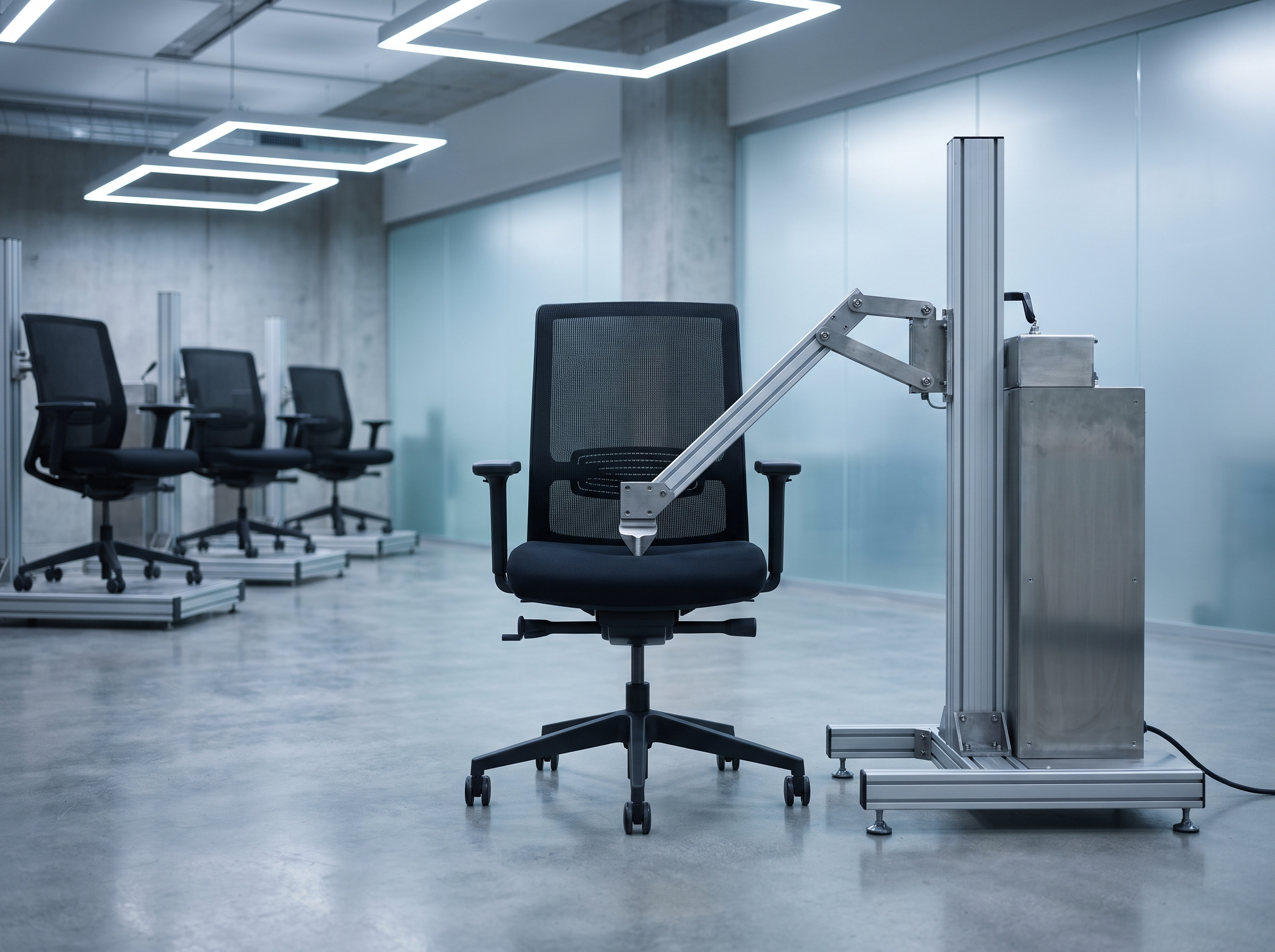
Which is why the cushions in your closet died the exact deaths they died.
See a foam built for hour four3.The Two Deaths Every Cushion Dies
Every cushion my patients bring in has died one of two ways. I could have called both from the density number on the box - if the maker had printed it.
The soft one flattened. Memory foam. Felt like a cloud in week one. By month two it had crushed down to a wafer. You were sitting on the floor.
The hard one stayed hard. Dense foam. Never gave. Bruised your sit bones from day two. You called it firm. Your hip muscles called it a daily beating and started to tighten - the same tightening that turns into chronic hip pain three years later.
Two failures. One cause: nobody matched the foam to a real body sitting on it for nine hours.
What Hour Four does: uses one dense-but-forgiving foam that does both jobs at once. Soft enough to cushion. Firm enough to still be there at 4 PM.
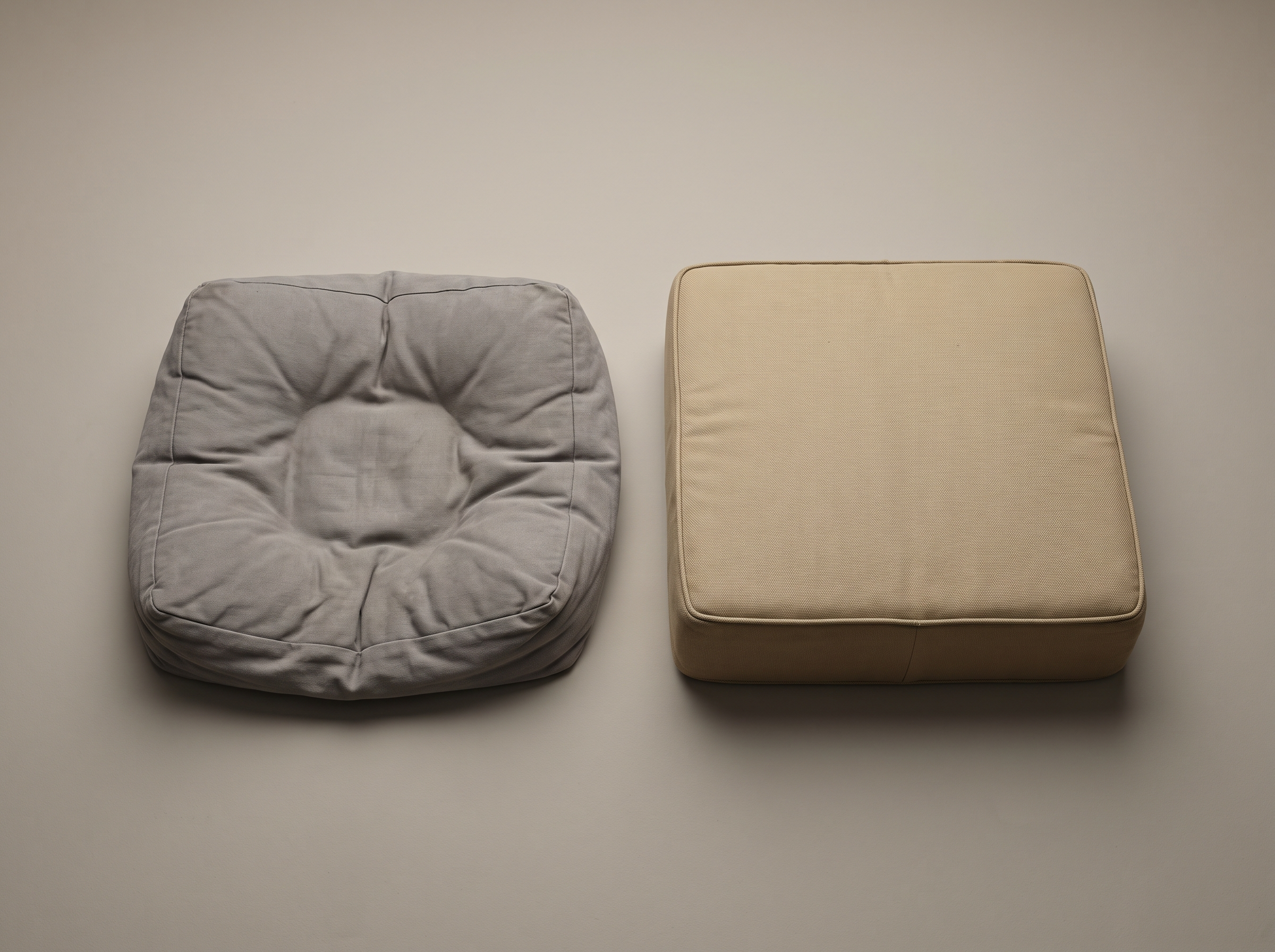
Which brings us to the sentence I have watched land on more patient faces than any other in eighteen years.
See a full-day density foamFive hundred miles and my old joints didn't hurt. First one still holding me up at the end of a shift - not turning into a thin sheet of paper by Tuesday.
4.It Was Never Your Weight. Never Your Age. It Was the Seat.
This is the sentence I have watched land on more patient faces than any other in 18 years.
You have been told - or you told yourself - that afternoon pain is just what happens when you get older. Every measurement I have taken says the same thing: when the seat carries you the right way, the pain goes away. No matter your age.
It was never your weight. Never your age. Never the padding you feel you lost in your thirties. It was the seat, and it has been the seat all along.
The stakes matter. Patients who accept the age story stop travelling in two years, stop sitting through long dinners in three, and buy a $3,000 recliner in five - because they never questioned the surface.
What Hour Four does: replaces the surface. On the same chair you already own. Hour Four is the first cushion I have watched actually end this pattern.
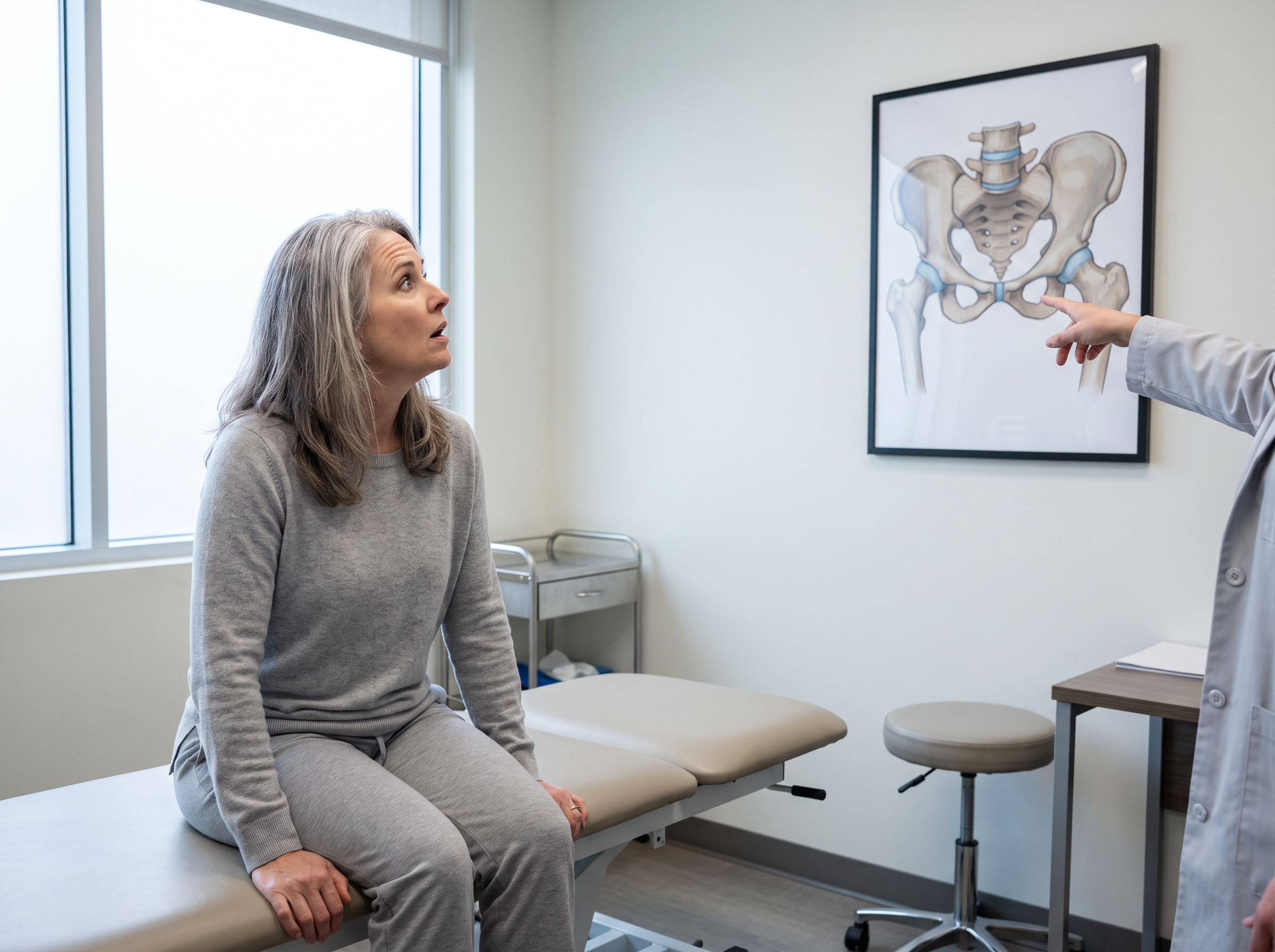
The mechanism is three bones and a piece of foam. That is the entire story of your afternoon.
See the three bones and the seat that carries them5.The Three Bones That Actually Take Your Weight
Three bones do 90% of the work of sitting.
Your two sit bones. The two bones you can feel if you sit on your hands. They are built to carry weight - but on a flat seat they concentrate most of your body onto just a few square centimetres each.
Your tailbone. The small curved bone at the base of your spine. It was never built to bear weight. Ever. When you slouch or the foam gives out, it bears it anyway. That is why tailbone pain sends about one in every hundred adults to a back doctor.
What Hour Four does: it is the first cushion I have measured that carries all three the right way. An oval cut-out under the tailbone so nothing touches it. Two channels under the sit bones so pressure spreads across a much wider area. A raised back panel that fills the gap every chair leaves behind your lower back.
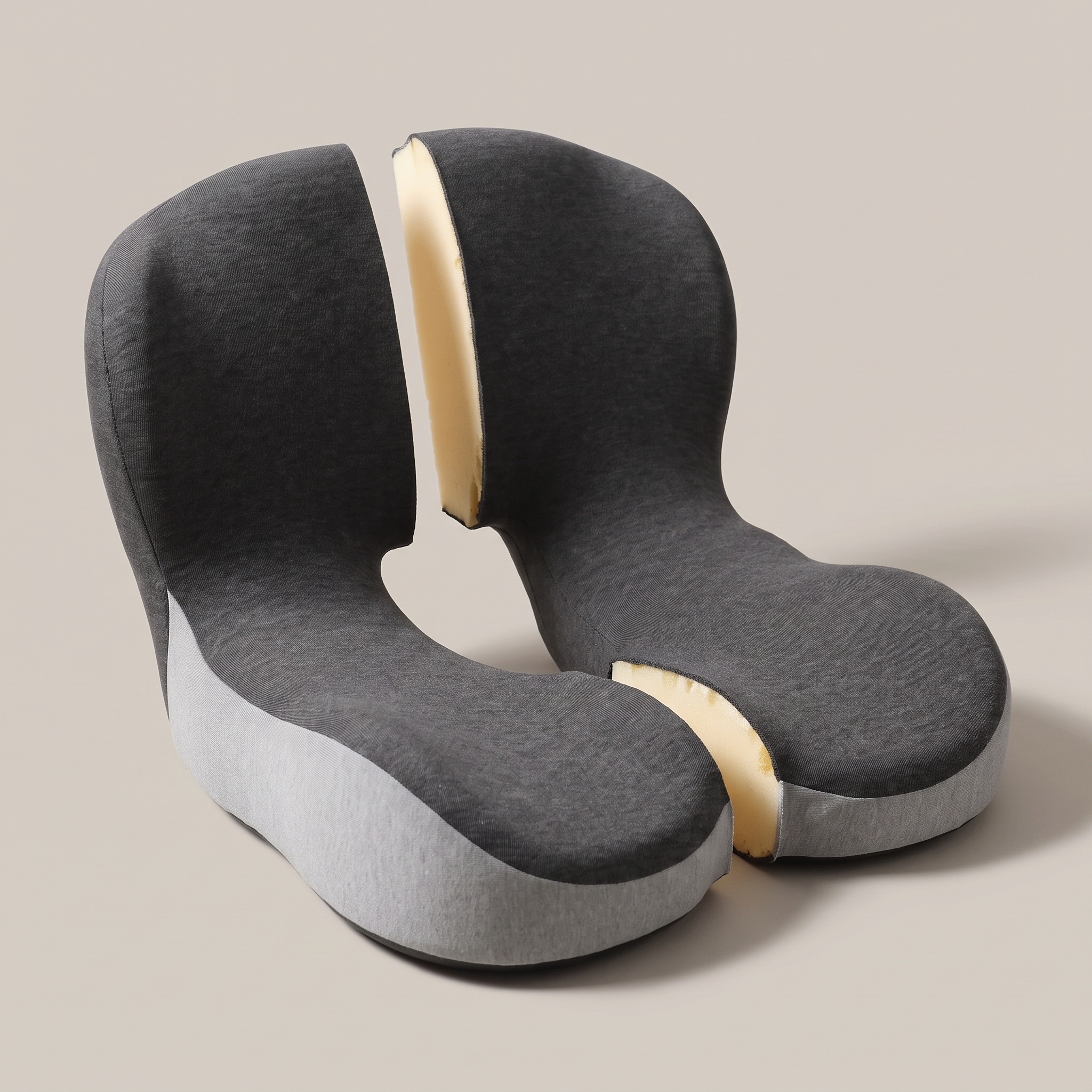
And this is the point at which I stopped recommending anything else.
See the mechanism cut openThree years of tailbone pain, some days I gave up and worked lying down. Now I sit at the table till five and get up like a normal person. Not too firm, not too soft.
6.Why I Threw Out My Recommendation Binder
For 16 years I kept a binder of cushions I recommended. Memory foam. Gel. Wedges. Donuts. The $300 ones with Latin names.
(One correction: I stopped recommending donuts years ago. The wound-care guidelines are clear - "do not use ring or donut-shaped positioning devices." They cut off blood flow around the tailbone even as they lift it.)
Every cushion in that binder came back to my desk within six months, flattened. Every one cost my patients between $50 and $300 and did not fix the underlying problem.
I threw the binder out. Hour Four is now the only cushion recommendation on my desk. Not because the maker paid me (they didn't and won't) but because it is the first foam I have watched still hold its shape after six months of a real patient sitting on it.
Judged at hour four. Not the unboxing.
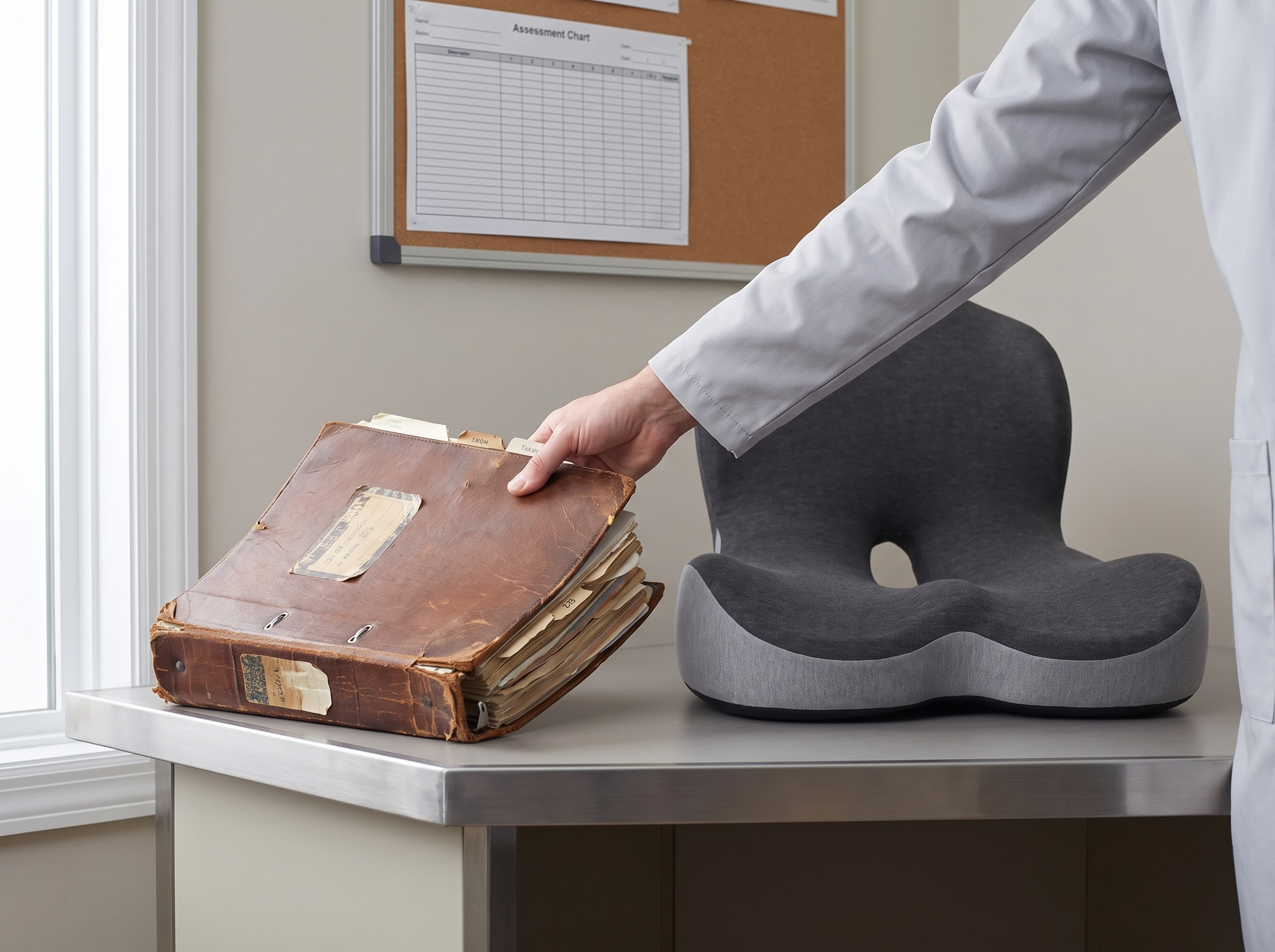
Which brings me to the only thing I ask a patient to do after they buy it.
See the six-month testDad's chair in the sunroom was giving him a sore tailbone every afternoon. It keeps his hips above his knees and he doesn't get sore now. He asked me to order one for the car.
7.The Ninety-Day Test I Ask Every Patient to Run
Here is what I ask every patient who buys it.
Use it every day for 90 days on the chairs you sit in most - your desk, your car, your kitchen table, your recliner. Do not switch back and forth with other cushions. Consistency is the whole point.
Watch for four things. By day 14, the wall at 4 PM disappears. You stop shifting more than once every 45 minutes. You stand up without the hobble. By day 60, you have stopped thinking about your seat entirely - which is the goal.
If any of those four are still missing at day 90, return it for a full refund. Prepaid label. No box needed. No reason needed.
This is the only cushion I ask my patients to run this test with. It is the only one that has passed it in my clinic.